No products in the basket.

Find the ideal Arabic good luck charm, from traditional amulets to decorative pieces. Hand of Fatima, Nazar eye or khamsa: symbols steeped in tradition.
Arabic good luck charms are very varied and each has its own meaning. The best known is the Hand of Fatima, also called the Khamsa. According to tradition, it is said to protect against the evil eye and to bring luck and peace.
You will find it as jewellery, pendants or wall decorations. Another popular charm is the chamsa in metal or wood, often with colourful patterns that add a lovely decorative touch while watching over you, as tradition has it. We also offer rugs or cushions adorned with traditional Arabic patterns, symbols of abundance and protection, which bring a spiritual dimension to your home.
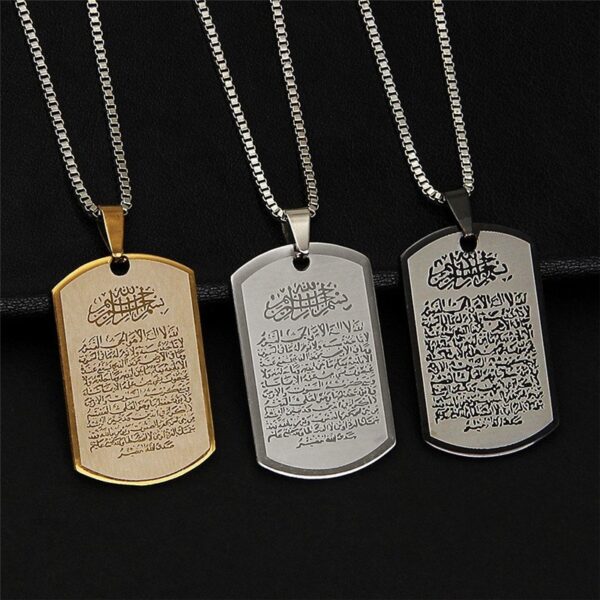
They are perfect for bringing a hint of luck to your house. Amulets with inscriptions in Arabic calligraphy are also much appreciated. These words or phrases are chosen, according to tradition, to attract health, fortune or success, serving as beneficial talismans.
You can choose good luck charms made by hand with natural materials, such as leather or beads, which give an authentic and lasting style. Each type of charm offers a direct link with Arab culture and lets you feel stability and good fortune day to day. We will help you find the one that will suit you best, according to what you wish to attract into your life.
An Arabic good luck charm is chosen first according to its meaning. Each symbol carries a different energy in tradition: for example, the Hand of Fatima is said to protect against the evil eye, while the khamsa is said to attract luck. Think about what you would most like to receive: protection, luck, love or success.
The size of the charm also affects its use. A small pendant is perfect for wearing everywhere, while a larger object is placed in a room to influence the mood and create symbolic protection. The material matters.
Gold-coloured or silver-coloured finishes suit a keepsake piece of jewellery that you will keep for a long time. Natural materials such as wood or stone bring an authentic and gentle touch. Also look at the design: a good luck charm should appeal to you visually, because you will wear it or keep it with you.
We offer different shapes and colours to help you find the one that really speaks to you. Finally, think about the cultural symbolic value. An Arabic good luck charm keeps a deep meaning in tradition, but it should also resonate with what you feel.
We are here to help you choose the one that will be a real comfort to you and bring you joy every day.
In many families, a blue eye is hung on the wall or on the door to protect the house from evil spells, as the tradition goes. This symbol, also called the Nazar eye, is used to keep away the evil gaze and to attract happiness into the home. Wearing a hand of Fatima as a pendant or a bracelet means that you are seeking to be protected, especially against jealousy and negative energies.
Often, a hand of Fatima or a protective eye is given at the birth of a child or at a wedding to wish luck and health. Some people slip a small verse of the Quran written on paper into an amulet, which they carry with them in a small pouch. This is reassuring and gives confidence, especially when travelling or sitting exams.
Many people also like to decorate their home with Arabic calligraphy and words such as “baraka” (blessing) and “salem” (peace), because these words are said to attract serenity and happiness into the household. When the time of the big festivals comes, such as Eid, these Arabic good luck charms are often given to loved ones. It shows that you are thinking of them and want to pass on some luck.
These age-old practices are an integral part of oriental culture and reflect the spiritual values handed down from generation to generation. If you would like to know more about the objects and rituals used during the Islamic religious festivals, discover our special selection dedicated to these important moments.