No products in the basket.

Oriental instruments: Meinl, Fuzeau and Vatan darbukas, Remo riq tambourines, skins and covers. Sturdy percussion to learn Arabic rhythms, beginner or not.
The oriental instruments in our section are mostly percussion: the darbuka, the riq and their accessories. They set the rhythm of Arabic, Turkish and Maghrebi music. They are learned by ear, without sheet music, by repeating simple rhythms. They can be played sitting or standing, solo or to accompany singers and dancers.
The darbuka is a goblet-shaped drum that rests on the thigh. You strike the centre for a deep sound, called the “dum”, and the edge for a high sound, called the “tek”. A third sound, the “ka”, is played at the edge with the other hand. These two sounds are enough to play the basic rhythms.
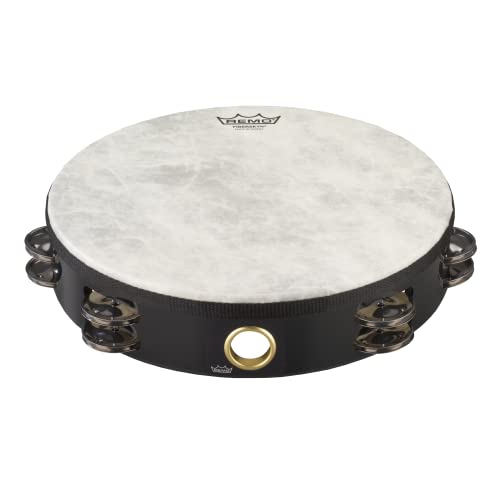
The riq is a small Egyptian tambourine. Its frame carries brass jingles, mounted in pairs. It is held in both hands and played with the fingertips, alternating between the skin and the jingles. Traditional models have a wooden frame decorated with mother-of-pearl.
We offer models from well-known brands: Meinl, Fuzeau, Vatan and Remo. You will also find replacement skins and darbuka covers, to carry and protect your instrument. Meinl is a German percussion brand; Remo is an American brand known for its synthetic skins.
First, look at the material of the body. An aluminium darbuka or a metal one is sturdy and loud. A ceramic or terracotta darbuka has a softer sound, but breaks if dropped. Fibreglass is light and well suited to children. Cast aluminium darbukas are often decorated with chased patterns or mother-of-pearl.
Next, choose the style. The Egyptian darbuka has a rounded rim, comfortable for the fingers. The Turkish darbuka has a sharp rim that leaves the skin exposed: it allows finger-snapping techniques, but is harder on beginners. Both styles are played with the same basic rhythms.
Check the skin. A synthetic skin keeps the same sound in damp or cold weather. A natural skin, made of goat or fish, sounds warmer but changes with the weather. Fish skin gives a very clear sound, popular with experienced players. To start with, a synthetic skin saves you a lot of adjusting.
Think about size. A child plays more easily with a small darbuka, light and easy to hold. The brand Fuzeau, a specialist in instruments for schools, offers models suited to children. Darbukas with tuning rods, adjusted with a key, let you tune the tension of the skin.
To tune a darbuka with tuning rods, tighten each nut by a quarter turn, in a crisscross pattern, like the wheel nuts on a car. Strike the centre after each turn to listen to the sound. Never overtighten: an overstretched skin can tear. Regular tuning keeps the “dum” nice and deep and the “tek” nice and crisp.
Store the instrument in a padded cover, away from sunlight and radiators. Damp slackens a natural skin; heat dries it out and can split it. If you are not playing for several weeks, loosen the rods slightly. A natural skin slackened by damp often tightens again as it dries at room temperature.
Wipe the metal body with a dry cloth after each session, to remove fingerprints. For the riq, check that the jingles turn freely on their axle and do not use any liquid product on the skin. Change the skin when it is dented or split. To remove it, loosen all the rods evenly before taking off the hoop.
To practise, play along to the records in our Arabic music section: Umm Kulthum’s songs are carried by the darbuka and the riq. The songs from oriental films also give you rhythms to follow. Browse the whole oriental music and films section.